Recently in Patent Application Prosecution Category

March 29, 2012

Supreme Court Of The United States Reversed The Federal Circuit On Method Claim For Treating Autoimmune Diseases Are Not Eligible For Patent Protection

Washington, D.C. - The United States Supreme Court has unanimously reversed a patent decision by the Court of Appeals for the Federal Circuit and has held that patent claims that are a "law of nature" are not patent eligible under 35 U.S.C. § 101. The decision built upon the Court's 2010 decision in Bilski v. Kappos.

Patent lawyers for Prometheus Laboratories, Inc. of San Diego, California filed a patent infringement suit against Mayo Collaborative Services, doing business as Mayo Medical Laboratories of Rochester, Minnesota, alleging that Mayo infringed patent no. 6,355,623, Method of treating IBD/Crohn's disease and related conditions wherein drug metabolite levels in host blood cells determine subsequent dosage and patent no. 6,680,302, Methods of optimizing drug therapeutic efficacy for treatment of immune-mediated gastrointestinal disorders which have been issued by the US Patent Office.

The patents at issue involve claims over an observed correlation between certain blood tests and patient health, specifically the correlation between the level of certain drug metabolites in the patient's blood and the patient's symptoms of gastrointestinal disease. The Court of Appeals for the Federal Circuit had twice ruled in Prometheus's favor. Oral arguments were held December 7, 2011 at the United States Supreme Court. The Court decision essentially held that Prometheus's "invention" was not patentable because it was effectively a law of nature. In other words, the relationship between the dosages and the effect on patient health was a natural phenomenon and therefore, unpatentable.

We blogged a preview of this case in October. This ruling is being criticized by the patent bar as making the law less clear. In particular, Robert S. Sachs of Fenwick & West LLP is examining the decision in a series of blogs on Patently-O in which he examines "just some of the logical and legal errors in the Court's decision." Sachs commentary also suggests that numerous patents should now be found invalid.

Practice Tip: The Court's decision has immediately changed protocol at the patent examination office. The US Patent Office has issued new guidelines to patent examiners which are available here.

Continue reading "Supreme Court Of The United States Reversed The Federal Circuit On Method Claim For Treating Autoimmune Diseases Are Not Eligible For Patent Protection" »

March 27, 2012

Digonex Technologies Sue QCUE Inc. for Patent Infringement of Ticket Pricing Software

Indianapolis, IN - Patent attorneys for Digonex Technologies, Inc. of Indianapolis, Indiana has filed a patent infringement suit in the Southern District of Indiana alleging that Qcue Inc., of Austin, Texas infringed patent numbers of the 8,095,424 and 8,112,303, which have been issued by the US Patent Office.

The plaintiff claims that the defendants sell dynamic pricing software products aimed at pricing tickets for events by a variety of names "Dynamic Pricing Dashboard," "the Qcue Product," and "software-based dynamic pricing solution" that infringe the patents held by Digonex.Digonex.bmp The technology is apparently marketed to sports teams and event promoters. The complaint alleges that Qcue has sold infringing products to Major League Baseball, Major League Soccer, National Basketball Association, National Hockey League and NASCAR. The complaint makes two claims of patent infringement and seeks a declaration of infringement, an injunction, damages, attorney fees and costs. The complaint also alleges that Qcue has the specific intent to induce others to infringe Digonex's patents.

Practice Tip: The complaint alleges that Qcue has referenced the two Digonex patents in a Qcue patent application pending before the US Patent Office. This, in part, is Digonex's "evidence" of willful infringement.  Also, Patent Office's records reveal that in prosecuting the  8,095,424 patent it submitted an Information Disclsosure Statement on September 30, 2011, after the claims had been allowed.  However, the Patent Office refused to consider the IDS becuase it did not comply with Patent Office regulations.  Therefore, there may be some question regarding the validity of this patent. 

Continue reading "Digonex Technologies Sue QCUE Inc. for Patent Infringement of Ticket Pricing Software" »

December 12, 2011

Federal Circuit Court of Appeals Affirms that It May Hear Legal Malpractice Claims Involving Patent Issue

Washington, DC - A recent decision in the Federal Circuit Court of Appeals in a legal malpractice claim involving a patent issue may have an impact on a recently filed Indiana case alleging patent attorneys committed legal malpractice, which was filed by Purdue Research Foundation late last month.

In Byrne v. Wood, Herron & Evans LLP, the Federal Circuit Court of Appeals CAFC Logo.bmpvacated a summary judgment in favor of the law firm Wood, Herron & Evans, and remanded to the lower court for further proceedings. The plaintiff sued the law firm for legal malpractice for failing to secure a patent that was broad enough to secure his invention of a grass and weed trimmer. The plaintiff claimed that due to the law firm's failure, he later lost a patent infringement lawsuit against Black & Decker. The court below granted summary judgment for the law firm, based in part on its decision that Mr. Byre was not an expert witness.

The appellate court also briefly took on the question of whether the federal courts have jurisdiction to hear legal malpractice claims, typically arising out of state law, when a patent issue is intertwined. The Court, citing Davis v. Brouse McDowell, L.P.A., 596 F.3d 1355 (Fed. Cir. 2010), confirmed that it did have jurisdiction over this case. However, the court acknowledged that other courts had disagreed.

The opinion is designated "non-precedential." This was an appeal from the Eastern District of Kentucky.

Practice Tip: The basis of the legal malpractice claims in the Purdue case are substantially different that here, however, this case confirms that in most situations involving a patent issue is appropriate for the federal courts to hear legal malpractice cases.

Continue reading "Federal Circuit Court of Appeals Affirms that It May Hear Legal Malpractice Claims Involving Patent Issue" »

December 8, 2011

Indiana District Court's Verdict for Alcon Laboratories in Patent Infringement Suit Over Eye Medication Now Pending on Appeal

Indianapolis, IN - A patent infringement judgment from the Southern District of Indiana will be reviewed by the Federal Circuit Court of Appeals. In May, Chief Judge Richard L. Young of the Southern District of Indiana issued a verdict and judgment in favor of plaintiffs Alcon Research Ltd., Alcon Laboratories, Inc., both of Fort Worth, Texas and Hakko Kirin Co., Ltd. (f/k/a Kyowa Hakko Kogyo Co., Ltd.) of Tokyo, Japan, after a bench trial on the plaintiff's patent infringement claims against Apotex, Inc., of Ontario, Canada and Apotex Corp. Weston, Florida. Alcon filed a complaint alleging Apotex infringed patent no.5,641,805, TOPICAL OPHTHALMIC FORMULATIONS FOR TREATING ALLERGIC EYE DISEASES, which has been issued by the US Patent Office.

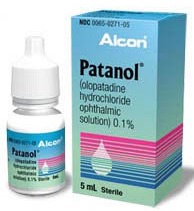
Chief Judge Young presided over a bench trial April 26, 2010 to May 7, 2010, and final arguments were presented to the court on August 3, 2010. The Court found that plaintiffs had "proven, by a preponderance of the evidence, that the Defendants' generic equivalent of Plaintiffs' patented allergy topical ocular medication, Patanol.bmpPatanol®;, infringed claims 1-8 of the '805 patent[,]" and that the defendant failed to show, by preponderance of evidence, that the patent claims were invalid. The court also found that the defendants failed to prove, by preponderance of evidence, that the '805 patent is unenforceable due to inequitable conduct.

Apotex has appealed the case to the Federal Circuit Court of Appeals (docket number 2011-1455). Apotex's brief was filed on October 3, 2011, and Alcon's brief is due on December 23, 2011.

Practice Tip: One of the defenses raised by Apotex was to claim the patent was unenforceable due to inequitable conduct. Apotex claimed that one of the inventors of the '805 failed to disclose results of certain tests and other data in the patent application. Apotex claimed the inventor as well as the attorney who filed the patent application violated their duty of candor to the PTO, which is imposes pursuant federal regulations 37 C.F.R. § 1.56(c). Alcon, however, presented evidence that the tests in question were believed to be inconclusive and that the inventor simply forgot about another test. Under the totality of circumstances, the court found that a finding of deceptive intent was not warranted. The court, therefore, declined to find that the patent should not be enforceable under the theory of inequitable conduct.

In addition, the court held that Apotex could not raise an additional theory of invalidity - invalidity for lack of a written description - until after the trial. The court found that the late disclosure had prejudiced the plaintiff and therefore refused to consider the new theory.

Continue reading "Indiana District Court's Verdict for Alcon Laboratories in Patent Infringement Suit Over Eye Medication Now Pending on Appeal" »

November 28, 2011

Purdue Research Foundation Sues Morrison & Foerster, LLP over a Trade Secret, Case Removed to Federal Court

Lafayette, IN - Attorneys for the Purdue Research Foundation ("PRF") of West Lafayette, Indiana have file a suit against the law firm of Morrison & Foerster, LLP alleging that Morrison & Foerster filed a patent application without PRF's authorization, specifically for patent PCT2009/060273 and misappropriated trade secrets in the course of filing this patent application.

PRF filed the original complaint in Tippecanoe County Circuit Court on October 7, seeking a permanent injunction to prevent Morrison from continuing the patent application, on which Morrison listed itself and PRF as the co-applicants. The original complaint alleges that Morrison continued to breach its fiduciary duties to PRFPRF.bmp through continuing to prosecute the patent application. Morrison filed to have the case removed to federal court, arguing that the case involved the federal questions of the inventorship of the claimed invention under the '273 patent.

Morrison's removal notice notes that PRF is currently involved in related lititgation against CoMentis Incorporated, who is Morrison's client. In that lawsuit, PRF alleges that CoMentis improperly disclosed trade secrets, which are covered by PRF's patents, when it filed the '273 patent application. Morrison states that this new case "is really an attempt by PRF to enjoin or otherwise interfere with an inventor's (CoMentis's) attempt to prosecute a patent application."

Practice Tip: In this case, PRF has alleged that Morrison owed it a fiduciary duty since Morrison filed the patent application and listed PRF as a co-applicant. Morrison disputes that it owed a fiduciary duty to PRF and states that any existence of a fiduciary duty would be governed by the Code of Federal Register, thus creating a federal question. In addition to this federal question, Morrison states PRF's complaint is really an "inventorship" dispute, which is also a federal question.

Continue reading "Purdue Research Foundation Sues Morrison & Foerster, LLP over a Trade Secret, Case Removed to Federal Court" »

November 7, 2011

Eli Lilly & Co. Loses Appeal in British Supreme Court Over Patent Dispute Over Gene Sequence

London, U.K. - The Supreme Court of the United Kingdom has ruled against Indianapolis-based Eli Lilly & Company in a patent dispute. Lilly had challenged the validity of the patent of Human Genome Sciences, Inc., of Rockville, Maryland that covers the gene sequence of a protein called Neutrokine-α. lilly.bmpLilly had challenged the patent based on the fact that there is no known use of the protein. Thus, Lilly argued, the gene sequence was not patentable due to a lack of industrial application.

According to the Indianapolis Business Journal, Lilly continues to maintain the patent is invalid. The IBJ quoted a Lilly statement as stating "Human Genome Sciences seek to foreclose a whole area of research in a way that is not only harmful to the industry, but would ultimately and unjustifiably hinder the future development of new medicines."

Practice Tip: The Court's decision was based upon the European Patent Convention and United Kingdom patent doctrine requiring a patentable invention be susceptible to industrial application, which is similar to the U.S. patent doctrine of utility. The Court's decision here holds that the U.S. doctrine of utility creates a higher bar to patentability that the E.U. and U.K. doctrine. The opinion explicitly rejected U.S. cases on the doctrine, including Brenner v Manson, 383 U.S. 519 (1966) and in re Fisher, 421 F.3d 1365 (2005).


Continue reading "Eli Lilly & Co. Loses Appeal in British Supreme Court Over Patent Dispute Over Gene Sequence" »

October 31, 2011

Preview of U.S. Supreme Court Patent Infringement Case Mayo Collaborative Services v. Prometheus Labs

Washington, D.C. - The United States Supreme Court will hear an important patent infringement case this term that will determine the scope of patent rights in certain medical methods.US Supreme Court.bmp Patent lawyers for Prometheus Laboratories, Inc. of San Diego, California filed a patent infringement suit against Mayo Collaborative Services, doing business as Mayo Medical Laboratories of Rochester, Minnesota, alleging that Mayo infringed patent no. 6,355,623, Method of treating IBD/Crohn's disease and related conditions wherein drug metabolite levels in host blood cells determine subsequent dosage and patent no. 6,680,302, Methods of optimizing drug therapeutic efficacy for treatment of immune-mediated gastrointestinal disorders which have been issued by the US Patent Office.

The patents at issue involve claims over an observed correlation between certain blood tests and patient health, specifically the correlation between the level of certain drug metabolites in the patient's blood and the patient's symptoms of gastrointestinal disease. As characterized by Mayo in its brief to the Supreme Court, the inventors did not "invent" these correlations; rather, they simply observed the correlations in a patient population. Based on the patents, Prometheus brought a blood test product called Pro-Predict to the market. The level of metabolite in the patient's blood can give the treating physician information relevant to adjusting the patient's dose of certain medications. Mayo improved upon Prometheus's blood test product and later released its own competing product. Patent attorneys for Prometheus then initiated this lawsuit, alleging that Mayo had infringed its patents. Mayo has attempted to defend the suit by arguing that Prometheus's patent claims were not patent-eligible under 35 U.S.C. § 101. The Court of Appeals for the Federal Circuit has twice ruled in Prometheus's favor.

The oral argument is scheduled for December 7, 2011 at the United States Supreme Court. The briefs can be found on the American Bar Association's preview page for the case. A number of amicus curiae briefs have been filed as well. Notably, the American Medical Association filed an amicus brief in support of Mayo.

Professor John Golden of the University of Texas Austin has an interesting blog on the case on Patently-O. Lyle Dennison shared his insight on the case on the SCOTUS blog.

Practice Tip: In 2010, the U.S. Supreme Court decided Bilski v. Kappos, which examined § 101 and held the machine-or-transformation test is not the sole test for determining patent eligibility, but is rather "a useful and important clue, an investigative tool, for determining whether some claimed inventions are processes under § 101." The decision in this case may clarify the Bilski holding.
October 4, 2011

U.S. Supreme Court Declines to Consider Several Intellectual Property Cases

Washington, DC - On Monday, October 3, 2011, the U.S. Supreme Court Thumbnail image for Thumbnail image for US Supreme Court.bmpopened its session and refused to review several appellate decisions in patent, trademark and copyright cases. These included the following cases:

Lockwood v. Sheppard, Mullin, Richter, & Hampton, LLP., U.S., No. 10-1339.

The Federal Circuit summarily affirmed a district court dismissal of a patent owner's malicious prosecution suite against the patent attorney that requested the USPTO to reexamine his patents. The patent owner had alleged, among other things, that the law firm filed a sham reexamination request with misrepresentations of the prior art. The district court held that the state law claims were essentially allegations of fraud and bad faith before the USPTO, preempted by federal law under Buckman Co. v. Plaintiffs' Legal Committee, 531 U.S. 341 (2001). The district court also found the claims over the 2003 reexamination request barred by the two-year statute of limitations.

ASCAP v. United States, U.S., No. 10-1337.

In this case, the Second Circuit affirmed summary judgment that downloading a musical work implicates the reproduction right, but not the public performance right, 627 F.3d 64 (2010). The decision arose in an action over music royalties brought by copyright attorneys for Yahoo and RealNetworks in New York district court. The Second Circuit held that the performance of a work requires that the work be "contemporaneously perceptible," which may be the case for streamed music but is not the case for downloaded music.

While the Supreme Court decides to review relatively few intellectual property cases, one case they are considering in December 2011 involves the patentability of pharmaceutical processes. In Mayo v. Prometheus it has asked the parties to answer the following question:

"Whether 35 U.S.C. § 101 is satisfied by a patent claim that covers observed correlations between blood test results and patient health, so that the claim effectively preempts all uses of the naturally occurring correlations, simply because well-known methods used to administer prescription drugs and test blood may involve "transformations" of body chemistry."

Oral argument is set for December 7, 2011
September 9, 2011

Southern District of Indiana Issues Markman Ruling in Cook Inc. v. Endologix Patent Infringement Case Over Aortic Stent

Indianapolis, IN - The Southern District of Indiana has issued a claim construction order in a patent infringement lawsuit. Cook Incorporated, of Bloomington, Indiana, had filed a patent infringement lawsuit in the Southern District of Indiana against Endologix, Inc., of Irvine, California. The patents at issue are owned by Cook and are patent nos. 5,035,706, PERCUTANEOUS STENT AND METHOD FOR RETRIEVAL THEREOF and 5,755,777, Thumbnail image for Cook Inc.bmpEXPANDABLE TRANSLUMINAL GRAFT PROSTHESIS FOR REPAIR OF ANEURYSM, which have been issued by the US Patent Office.

The patents at issue are medical devices that are used to treat abdominal aortic aneurysms, which are caused by the weakening of the aorta. The patented technologies are stents that strengthen the walls of the aorta and delivery systems. Cook alleges that Endologix's Powerlink product infringes its patents. On April 15, 2011, the court held a Markman hearing to determine whether the patents cover the alleged infringer's product. The parties disputed whether certain features of Endologix product were covered by Cook's patents and the meaning of specific terms in the patent's claims. Judge Pratt's order set out the meaning of over thirty the disputed claim terms.

According to Yahoo Finance, Endologix has interpreted the rulings to be favorable.

Practice Tip: As the court described in its opinion, "[i]n order to win a patent infringement suit, a plaintiff must establish that the patent claim "covers the alleged infringer's product or process." Markman, 517 U.S. at 374 (citation and internal quotations omitted). Consequently, the first step in an infringement analysis involves determining the meaning and the scope of the words of the patent's claims." While resolution of disputed claim terms, such as what occurred in this opinion, does not resolve the controversy entirely, it is a significant step.

Continue reading "Southern District of Indiana Issues Markman Ruling in Cook Inc. v. Endologix Patent Infringement Case Over Aortic Stent" »

June 6, 2011

Federal Circuit Applies Analogous Art Test to Exclude Prior Art References from Obviousness Analysis


Washington, DC - In a decision that may impact both patent prosecutors and litigators, the United States Court of Appeals for the Federal Circuit applied the analogous-art test to exclude certain prior art references from the consideration of whether a claimed invention was obvious in light of the prior art.In this case, patent applicant Arnold Klein appealed the rejection of certain claims in U.S. Patent Application No. 10/200,747 as obvious under 35 U.S.C. § 103. The relatively simple technology at issue is "a mixing device for use in preparation of sugar-water nectar for certain bird and butterfly feeders," with sugar and water compartments separated by a removable divider. The placement of the dividerPicture-1.bmp can vary, depending on the species of bird to be fed. The device maintains a proper nectar ratio so long as water and sugar are at the same "line of sight" level.Citing prior art patents, the examiner at the USPTO made five rejections, each based on the notion that Mr. Klein's invention would be obvious to one of ordinary skill in the art, and these rejections were each affirmed by the Board of Patent Appeals and Interferences ("the Board").


Noting that a reference qualifies as prior art for an obviousness determination under § 103 only when it is "analogous" to the claimed invention, the Federal Circuit initially focused on the particular problem being solved by Mr. Klein and narrowly stated it as: "making a nectar feeder with a movable divider to prepare different ratios of sugar and water for different animals." The court found that the three cited prior art references (respectively disclosing a type of drawer, a particular tray, and an "apparatus for keeping accounts") which feature solid item separators are not pertinent to this problem "since none of these three references shows a partitioned container that is adapted to receive water or contain it long enough to be able to prepare different ratios in the different compartments."


As for the two remaining prior art references (disclosing a type of "blood plasma bottle" and a certain fluid container), they are directed at dividing liquids which are mixed later; the Federal Circuit concluded that neither of these references are pertinent to Mr. Klein's invention "because they do not address multiple ratios or have a 'movable divider'." Because none of the cited references were completely analogous to the stated problem, no grounds remained to support the obviousness rejections, and the Board's decision was reversed.


Practice Tip: Curiously, this opinion does not address the KSR Int'l Co. v. Teleflex, Inc., 550 U.S. 398 (2007), decision by the United States Supreme Court, which allows for consideration of subjective "common sense" when determining whether a person of ordinary skill in the art would find motivation to combine elements known in the prior art. This failure to consider KSR may limit the impact of the Klein decision.

May 16, 2011

U.S. Patent Office Pre-Examination Interview Program Expanded

Alexandria, VA - The United States Patent and Trademark Office (USPTO) recently announced its First Full Action Interview Pilot Program, which, unlike a previous test program, applies to all areas of technology.

Under this program, if an eligible utility patent applicant electronically files a request prior to the first Office action on the merits, he or she must be granted an interview with the patent examiner assigned to the case. Traditionally, the grant of such a preliminary interview was with the discretion of the examiner.

To be eligible, the subject patent application must not have more than three independent claims and twenty or fewer total claims that are directed to a single invention.

After a proper request has been filed, the examiner will conduct a prior art search and provide the applicant with a Pre-Interview Communication which will include cites to prior art references and an identification of potential rejections and/or objections (if at least one claim is not allowable).

The electronic requests to participate may be filed as of May 16, 2011, and the program will run for one year from that date. No additional fees are required to participate.

The USPTO previously conducted this sort of program as an experiment in certain technical areas under the name Enhanced First Action Interview Pilot Program. The present expansion of the program is based upon comments from the public as well as USPTO professionals.