Recently in Pharmaceuticals Category

February 28, 2013

Eli Lilly Sues Accord Healthcare Again for Infringement of Patented ALIMTA

Indianapolis, IN - Eli Lilly and Company of Indianapolis, Indiana filed an additional patent infringement suit in the Southern District of Indiana alleging Thumbnail image for Lilly2.JPGthat Accord Healthcare, Inc., USA of Durham, North Carolina will infringe U.S. Patent No. 7,772,209 (the "'209 patent") which has been issued by the U.S. Patent Office if relief is not afforded by the court. 

In a complaint that was almost identical to a previous complaint filed in January 2012, patent attorneys for Eli Lilly and Company ("Lilly") initiated an additional lawsuit against Accord Healthcare, Inc., USA ("Accord") for attempting to gain FDA approval to manufacture and sell a generic version of Lilly's ALIMTA, a drug that is used in the treatment in certain types of lung cancer.  ALIMTA is protected by the '209 patent. 

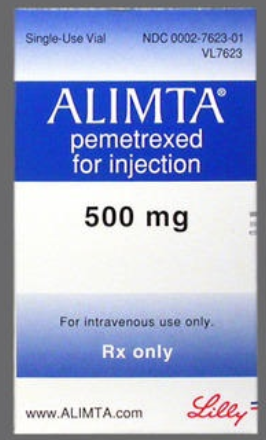
This is the second suit by Lilly against Accord involving the '209 patent.  This suit was initiated after Accord filed an Abbreviated New Drug Application ("ANDA") with the FDA for a product that competes with Lilly's ALIMTA, which is an "Antifolate Combination Therapies" product.  The complaint from 2012 alleged intent to infringe by, among other activities, the production and sale of Accord's "Pemetrexed Disodium for Injection," Thumbnail image for Accord.JPGa generic version of ALIMTA, in 100 mg/vial and 500 mg/vial products.  The current complaint alleged intent to infringe with a "Pemetrexed Disodium for Injection" product in a 1000 mg/vial strength.  As part of its ANDA filing, Accord alleged that the claims of the '209 patent are invalid and/or not infringed by Accord's product. 

Eli Lilly has sued alleging infringement of the patented ALIMTA before: 

·         Eli Lilly Sues Apotex Inc. for Patent Infringement of ALIMTA

·         Eli Lilly and Company Sues Accord Healthcare for Patent Infringement of Lung Cancer Drug ALIMTA

·         Lilly Wins Patent Infringement Suit Regarding Chemotherapy Drug

·         Eli Lilly Company Sues APP Pharmaceuticals LLC for Patent Infringement of Chemotherapy Drug

Lilly seeks a judgment that Accord has infringed and/or will infringe, actively induce infringement of, and/or contribute to infringement by others of the '209 patent; a judgment ordering that Accord delay virtually all activities pertaining to its ANDA product until after the '209 patent has expired; a preliminary and permanent injunction against activity that infringes upon the '209 patent; a declaratory judgment of infringement; a declaration that the case is exceptional and an award of attorneys' fees pursuant to such a declaration; and Lilly's costs and expenses. 

Practice Tip #1: The FDA's ANDA process for generic drugs has been abbreviated such that, in general, the generic drug seeking approval does not require pre-clinical (animal and in vitro) testing.  Instead, the process focuses on establishing that the product is bioequivalent to the "innovator" drug that has already undergone the full approval process.  The statute that created the abbreviated process, however, had also created some interesting jurisdictional issues with respect to declaratory judgments.  For an interesting look at some of the issues, see here.

Continue reading "Eli Lilly Sues Accord Healthcare Again for Infringement of Patented ALIMTA" »

February 28, 2013

Lilly Sues Genentech to Invalidate Cabilly Patents

San Jose, CA - Lilly of Indianapolis, Indiana filed a declaratory judgment suit against Genentech asking the U.S. District Court, Northern District of California to invalidate Genentech's recombinant-antibody patents.

This suit, filed by patent attorneys for Eli Lilly & Company ("Lilly") LillyLogo.JPGand its subsidiary ImClone Systems LLC, of Delaware, included as defendants both Genentech, Inc. ("Genentech") and City of Hope National Medical Center ("City of Hope").

Genentech.JPGGenentech, also known as "Genetic Engineering Technology, Inc." is a wholly owned subsidiary of F. Hoffmann-La Roche Holding AG engaged in biotechnology research. 

It has won numerous awards as an employer and corporate citizen, including earning the number-one spot on Fortune Magazine's "100 Best Companies To Work For" in 2006.

City of Hope is a private, not-for-profit clinical research center, hospital and graduate medical school located in Duarte, California.

CityOfHopeLogo.JPGThe suit involves two patents held by Genentech: 6,331,415: "Methods of producing immunoglobulins, vectors and transformed host cells for use therein" ("Cabilly II") and 7,923,221: "Methods of making antibody heavy and light chains having specificity for a desired antigen," ("Cabilly III"), together known as the "Cabilly patents" after one of the inventors.  They have been issued by the U.S. Patent Office.

At issue is the drug Erbitux (cetuximab), made by Lilly's ImClone unit.  Genentech claims that the drug, approved in the U.S. to treat colon cancer and tumors of the head and neck, infringes the Cabilly patents through the unlicensed use of a patented process and various patented starting materials.

Despite that Lilly already has a non-exclusive license to the Cabilly patents, it filed a declaratory judgment action.  It asserts that it has no obligation to pay royalties on the sale of Erbitux, arguing that the Cabilly patents are invalid and unenforceable, and, further, not infringed by Lilly.  It alleges that Cabilly patents are invalid for, among other reasons, lack of inventorship, inequitable conduct and violation of 35 U.S.C. § 135(c) (which relates to the filing of settlement agreements with the PTO in interference actions).  Lilly also alleges that Genentech deceived the U.S. Patent Office into issuing the Cabilly patents.

Lilly seeks a declaratory judgment that the Cabilly patents are invalid and unenforceable, and are not implicated in the manufacture of Erbitux.

Practice Tip: The Cabilly patents have a potentially broad scope and could confront any manufacturer of recombinant antibodies.  Genentech has been quoted as stating that the patents broadly cover the co-expression of immunoglobulin heavy and light genes in a single host cell, and are not limited by the type of antibody or host cell.  Genentech has also been quoted as stating that the Cabilly II patent is "the backbone of recombinant antibody production in the biotech industry."  Given Genentech's history of actively litigating this family of patents (see, e.g., MedImmune, Inc. v. Genentech, Inc, et al., which was litigated to the U.S. Supreme Court), and the purported broad scope of the Cabilly patents, it seems that litigation regarding these patents may continue for quite some time.

Continue reading "Lilly Sues Genentech to Invalidate Cabilly Patents" »

April 23, 2012

Eli Lilly Sues Apotex Inc. for Patent Infringement of ALIMTA

Indianapolis, IN - Patent attorneys for Eli Lilly of Indianapolis, Indiana filed a patent infringement suit in alleging Apotex of Toronto, Canada infringed patent no. 7772209, ALIMTA, which has been issued by the US Patent Office.

ALIMTA is a chemotherapy drug used to treat mesothelioma and other lung cancers. Lilly co-owns the patent with Princeton University.alimta.bmp This lawsuit arises from Apotex's filing of an Abbreviated New Drug Application in March 2012 with the Food and Drug Administration that utilizes the ALIMTA patent. Lilly alleges that Apotex seeks approval for ANDA and that the product infringes its patents. The complaint makes one claim of patent infringement and seeks a declaration of infringement, an injunction, attorney fees and costs.

Practice Tip: Lilly's ALIMTA has been the subject of several patent infringement cases. Here are a few we have blogged about:

Continue reading "Eli Lilly Sues Apotex Inc. for Patent Infringement of ALIMTA" »

January 25, 2012

Eli Lilly and Company Sues Accord Healthcare for Patent Infringement of Lung Cancer Drug ALIMTA

Indianapolis, IN - Patent attorneys for Eli Lilly and Company of Indianapolis, Indiana filed a patent infringementlilly.bmp suit in the Southern District of Indiana alleging that Accord Healthcare, Inc., USA of Durham, North Carolina infringed patent no. 7,772,209, Antifolate combination therapies, which has been issued by the US Patent Office.

The complaint states that in December Accord sent a letter notifying Lilly that Accord had submitted an Abbreviated New Drug Application (ADNA) to the Food and Drug Administration (FDA) for its generic version of Alimta. Lilly alleges that Accord's proposed product and labeling will infringe its patents. Lilly seeks an injunction to prevent Accord from developing, manufacturing and selling the allegedly infringing product.

Practice Tip: Lilly has already won a patent infringement case over Alimta. As we blogged about last year, the District Court of Delaware affirmed the validity of Alimta patents. This lawsuit, however, is over a patent that was not the subject of the District Court of Delaware's decision.

Continue reading "Eli Lilly and Company Sues Accord Healthcare for Patent Infringement of Lung Cancer Drug ALIMTA" »

December 8, 2011

Indiana District Court's Verdict for Alcon Laboratories in Patent Infringement Suit Over Eye Medication Now Pending on Appeal

Indianapolis, IN - A patent infringement judgment from the Southern District of Indiana will be reviewed by the Federal Circuit Court of Appeals. In May, Chief Judge Richard L. Young of the Southern District of Indiana issued a verdict and judgment in favor of plaintiffs Alcon Research Ltd., Alcon Laboratories, Inc., both of Fort Worth, Texas and Hakko Kirin Co., Ltd. (f/k/a Kyowa Hakko Kogyo Co., Ltd.) of Tokyo, Japan, after a bench trial on the plaintiff's patent infringement claims against Apotex, Inc., of Ontario, Canada and Apotex Corp. Weston, Florida. Alcon filed a complaint alleging Apotex infringed patent no.5,641,805, TOPICAL OPHTHALMIC FORMULATIONS FOR TREATING ALLERGIC EYE DISEASES, which has been issued by the US Patent Office.

Chief Judge Young presided over a bench trial April 26, 2010 to May 7, 2010, and final arguments were presented to the court on August 3, 2010. The Court found that plaintiffs had "proven, by a preponderance of the evidence, that the Defendants' generic equivalent of Plaintiffs' patented allergy topical ocular medication, Patanol.bmpPatanol®;, infringed claims 1-8 of the '805 patent[,]" and that the defendant failed to show, by preponderance of evidence, that the patent claims were invalid. The court also found that the defendants failed to prove, by preponderance of evidence, that the '805 patent is unenforceable due to inequitable conduct.

Apotex has appealed the case to the Federal Circuit Court of Appeals (docket number 2011-1455). Apotex's brief was filed on October 3, 2011, and Alcon's brief is due on December 23, 2011.

Practice Tip: One of the defenses raised by Apotex was to claim the patent was unenforceable due to inequitable conduct. Apotex claimed that one of the inventors of the '805 failed to disclose results of certain tests and other data in the patent application. Apotex claimed the inventor as well as the attorney who filed the patent application violated their duty of candor to the PTO, which is imposes pursuant federal regulations 37 C.F.R. § 1.56(c). Alcon, however, presented evidence that the tests in question were believed to be inconclusive and that the inventor simply forgot about another test. Under the totality of circumstances, the court found that a finding of deceptive intent was not warranted. The court, therefore, declined to find that the patent should not be enforceable under the theory of inequitable conduct.

In addition, the court held that Apotex could not raise an additional theory of invalidity - invalidity for lack of a written description - until after the trial. The court found that the late disclosure had prejudiced the plaintiff and therefore refused to consider the new theory.

Continue reading "Indiana District Court's Verdict for Alcon Laboratories in Patent Infringement Suit Over Eye Medication Now Pending on Appeal" »

November 7, 2011

Eli Lilly & Co. Loses Appeal in British Supreme Court Over Patent Dispute Over Gene Sequence

London, U.K. - The Supreme Court of the United Kingdom has ruled against Indianapolis-based Eli Lilly & Company in a patent dispute. Lilly had challenged the validity of the patent of Human Genome Sciences, Inc., of Rockville, Maryland that covers the gene sequence of a protein called Neutrokine-α. lilly.bmpLilly had challenged the patent based on the fact that there is no known use of the protein. Thus, Lilly argued, the gene sequence was not patentable due to a lack of industrial application.

According to the Indianapolis Business Journal, Lilly continues to maintain the patent is invalid. The IBJ quoted a Lilly statement as stating "Human Genome Sciences seek to foreclose a whole area of research in a way that is not only harmful to the industry, but would ultimately and unjustifiably hinder the future development of new medicines."

Practice Tip: The Court's decision was based upon the European Patent Convention and United Kingdom patent doctrine requiring a patentable invention be susceptible to industrial application, which is similar to the U.S. patent doctrine of utility. The Court's decision here holds that the U.S. doctrine of utility creates a higher bar to patentability that the E.U. and U.K. doctrine. The opinion explicitly rejected U.S. cases on the doctrine, including Brenner v Manson, 383 U.S. 519 (1966) and in re Fisher, 421 F.3d 1365 (2005).


Continue reading "Eli Lilly & Co. Loses Appeal in British Supreme Court Over Patent Dispute Over Gene Sequence" »

October 28, 2011

Southern District Court Grants Partial Summary Judgment for Eli Lilly and Company in Dispute With Parkinson's Disease Drug Licensee Over Products Liability Lawsuit

Indianapolis. IN - Judge Tanya Walton Pratt of the Southern District of Indiana has granted a Partial Summary Judgment for Eli Lilly and CompanyThumbnail image for lilly.bmp of Indianapolis, Indiana in a dispute with licensee Valeant Pharmaceuticals International of Irvine, California involving the costs associated with product liability lawsuits over Lilly's Parkinson's disease drug.

Lilly began selling a product called Permax, which is used to treat Parkinson's disease, in 1989. In March 2002, Lilly entered an exclusive licensing agreement with Amarin Corporation allowing Amarin to market, use and sell Permax in the United States, including the licensed use of Permax trademarks. The parties' license agreement prohibited either party from assigning rights or obligations under the contract to any third party absent written consent of the other party. In 2004, Valeant purchased the assets of Amarin, including the rights under the Permax license. Lilly provided written consent to this assignment in a letter agreement that also addressed costs and indemnification relating to defending a pending products liability lawsuit involving Permax. The present lawsuit was filed when a dispute arose between Lilly and Valeant over the costs and indemnification relating to the products liability lawsuit. After settlement of one of the products liability cases, Valeant refused to indemnify Lilly. Lilly sought a declaratory judgment requiring Valeant to pay certain litigation and settlement costs relating to the products liability suit.

In the court's decision, Judge Pratt found that the parties' contract was clear and unambiguous in providing a schedule for sharing costs associated with the product liability suit. Thus Valeant must pay Lilly pursuant the schedule in the contract.

Practice Tip: This case illustrates that license agreements, which grant the licensee limited rights to use the intellectual property, owned by the licensor, can come with additional responsibilities and obligations. It is important to have an intellectual property attorney draft and review license agreements to ensure that the parties understand what is included.

Continue reading "Southern District Court Grants Partial Summary Judgment for Eli Lilly and Company in Dispute With Parkinson's Disease Drug Licensee Over Products Liability Lawsuit" »

August 12, 2011

Lilly Wins Patent Infringement Suit Regarding Chemotherapy Drug

Wilmington, DE - Indianapolis-based Eli Lilly & Company has won patent infringement protection of the drug Lilly's drug ALIMTA drug, which is a chemotherapy drug used to treat mesothelioma and other lung cancers. Lilly co-owns the patent with Princeton University. The lawsuit arose from an Abbreviated New Drug Application filed with the Food and Drug Administration that had been filed by Teva Parenteral Medicines of Israel, alleging APP Pharmaceuticals LLC of Schaumburg, Illinois, and Barr Laboratories of Montvale, New Jersey. Their ANDA sought approval to sell generic versions of ALIMTA prior to the expiration of the patent.

As soon as the ADNA was filed, Lilly's patent attorneys filed a patent infringement lawsuit in the District Court of Delaware. The defendants had claimed that the ALIMTA patent, patent no. 5,344,932, N-(pyrrolo(2,3-d)pyrimidin-3-ylacyl)-glutamic acid derivatives,Lilly patent picture.bmp which has been issued by the US Patent Office, was invalid "under the doctrine of obviousness-type double patenting because the claimed invention is an obvious modification of inventions claimed in commonly-owned U.S. Patent Nos. 5,028,608 ("the '608 patent") and 5,248,775 ("the '775 patent) in light of the relevant prior art." The court held a five day bench trial in November 2010.

The Chief Judge Gregory Sleet wrote for the court in upholding the validity of the patent. "The court concludes that the examples found in the '775 patent specification do not support a finding of invalidity for obviousness-type double patenting because this case does not present a situation in which separate patents are sought for a claim to a compound and a claim to using that compound for the disclosed utility of the original compound."

According to WISHTV.COM, Alimta was Lilly's third best selling drug and had sales of $1.64 billion in first three quarters of 2010. The Alimta patent has been the subject of much litigation. On July 15, 2011, Lilly filed a patent infringement lawsuit regarding the same patent and against APP Pharmaceuticals, also a defendant in this case. Indiana Intellectual Law News blogged on the case here.

Continue reading "Lilly Wins Patent Infringement Suit Regarding Chemotherapy Drug" »

August 1, 2011

Lilly Wins Appeal Protecting Attention-Deficit Disorder Drug Patent

Washington, D.C. - Indianapolis-based Eli Lilly & Co. won a lawsuit against seven other pharmaceutical companies that sought FDA approval to sell competing drugs that would have utilized Lilly's patented drug formula. The seven defendants, Actavis Elizabeth LLC, Sun Pharmaceuticals, Sandoz Inc., Mylan Pharmaceuticals, Apotex Inc., Aurobindo Pharma Ltd., and Teva Pharmaceuticals, had filed an Abbreviated New Drug Application (ANDA) seeking to utilize Lilly's patented formula and claiming invalidity of Lilly's patent, No. 5,658,590,Thumbnail image for lilly.bmp Treatment of attention-deficit/hyperactivity disorder, which has been issued by the US Patent Office. The patented drug is marketed under the name Strattera and is used to treat Attention-Deficit Disorder.

Upon the filing of the ADNA, Lilly's patent attorneys immediately filed this patent infringement lawsuit in the United States District Court of New Jersey. The district court sustained the '590 patent against the defendants' challenges on the grounds of inequitable conduct, anticipation, obviousness, and non-enablement. However, the court held the claims invalid for lack of utility, which the court called "enablement/utility." The Federal Circuit Court went further in protecting Lilly's patent and upheld the patent in its entirety. The ruling ensures that Lilly's patent will be fully enforceable through its expiration in 2017.

According to the Indianapolis Business Journal, the drug generated $577 million in sales for Lilly last year.

The case is Eli Lilly & Co. v. Actavis Elizabeth LLC et al, Case No. 2010-1500 in the Court of Appeals for the Federal Circuit, decided July 29, 2011. The opinion notes it is "nonprecedential."

Continue reading "Lilly Wins Appeal Protecting Attention-Deficit Disorder Drug Patent" »

July 15, 2011

Eli Lilly Company Sues APP Pharmaceuticals LLC for Patent Infringement of Chemotherapy Drug

Indianapolis, IN - Patent lawyers for Eli Lilly Company of Indianapolis, Indiana lilly.bmpfiled a patent infringement judgment suit in the Southern District of Indiana alleging APP Pharmaceuticals LLC of Schaumburg, Illinois infringed patent no.7,772,209 , Antifolate combination therapies, which has been issued by the US Patent Office.

The complaint states that APP has filed an abbreviated new drug application with the Food and Drug Administration seeking to sell a generic version of the drug ALIMTA, which is patented by Lilly, prior to the expiration of the patent. Lilly alleges that APP will begin to market and sell the generic drug. ALIMTA is a chemotherapy drug used to treat mesothelioma and other lung cancers. Lilly's patent attorneys contend that the marketing and sale of APP'sAPP.bmp generic version will infringe Lilly's patent. The complaint alleges two counts of patent infringement and seeks a judgment of infringement, injunction, costs and attorney's fees.

Practice Tip: This case has been filed before APP actually marketed or sold any of the infringing product.  Rather, Lilly appears to have become concerned about infringement due to the new abbreviated new drug application and notice that APP provided to Lilly. It is common for a patent infringement lawsuit, seeking an injunction and declaratory judgment, to be filed after a new abbreviated new drug application is filed with the Food and Drug Administration. The Patent Act, 35 U.S.C. § 283, allows a court with jurisdiction to grant an injunction "to prevent the violation of any right secured by patent, on such terms as the court deems reasonable."

Continue reading "Eli Lilly Company Sues APP Pharmaceuticals LLC for Patent Infringement of Chemotherapy Drug" »

June 9, 2011

Alcon Research Sues Watson Laboratories Inc for Patent Infringement of Allergy Eye Drops

Indianapolis, IN - Patent lawyers for Alcon Research Ltd of Fort Worth, Texas, Alcon Pharmaceuticals LTD of Switzerland, and Kyowa Haddo Kirin Co. of Japan filed a patent infringement in alleging Watson Laboratories Inc and Watson Pharma, Inc. of Parsippany, New Jersey, and Watson Laboratories, of Corona, California, infringed the following patent prior to the expiration:

Patent No. 5,641,805, Topical ophthalmic formulations for treating allergic eye diseases, Patent No. 6,995,186, Olopatadine formulations for topical administration and Patent No. 7,402,609, Olopatadine formulations for topical administration, which have been issued by the US Patent Office.

The Complaint alleges that Watson has filed an Abbreviated New Drug Application ("ANDA") with the Food and Drug Administration "seeking approval to manufacture and sell a generic version of PATADAY™ ophthalmic solution," a drug product that is covered by several patents owned by Alcon. The Complaint states that Watson sent a letter to Alcon on April 27, 2011 notifying Alcon of Watson's ANDA and intent to manufacture and sells products covered by the ADNA. According to Alcon, Watson's April 27 letter and ANDA stated that Alcon's patents are invalid, unenforceable and/or will not be infringed. Alcon has made three claims of patent infringement and three claims for a declaratory judgment of infringement. Alcon's patent attorneys are seeking an injunction, declaratory judgment, attorney's fees and costs. Alcon has alleged that the basis for jurisdiction of the Southern District of Indiana is that Watson markets and sells drug products nationwide and in Indiana.

Practice Tip: Alcon's patent attorneys filed this case before apparently before Watson actually sold any allegedly infringing products. Hence, they are seeking an injunction to prevent any potentially infringing sales as well as a declaration judgment of infringement, rather than monetary damages. These remedies, if granted, could prevent monetary damages that could occur if infringing products are sold. The Patent Act,  35 U.S.C. § 283, allows a court with jurisdiction to grant an injunction "to prevent the violation of any right secured by patent, on such terms as the court deems reasonable."

Continue reading "Alcon Research Sues Watson Laboratories Inc for Patent Infringement of Allergy Eye Drops" »